




INDUSTRY SOLUTIONS
Built for every fleet type
Choose your vertical to see how LivePin adapts intelligence for dispatch, safety, compliance, and service velocity.
Last-mile execution designed for e-commerce delivery density
Deliveries Today
843
762 completed
Failed Attempts
12
3 priority
SLA Confidence
96%
region-wide
How LivePin helps this operation
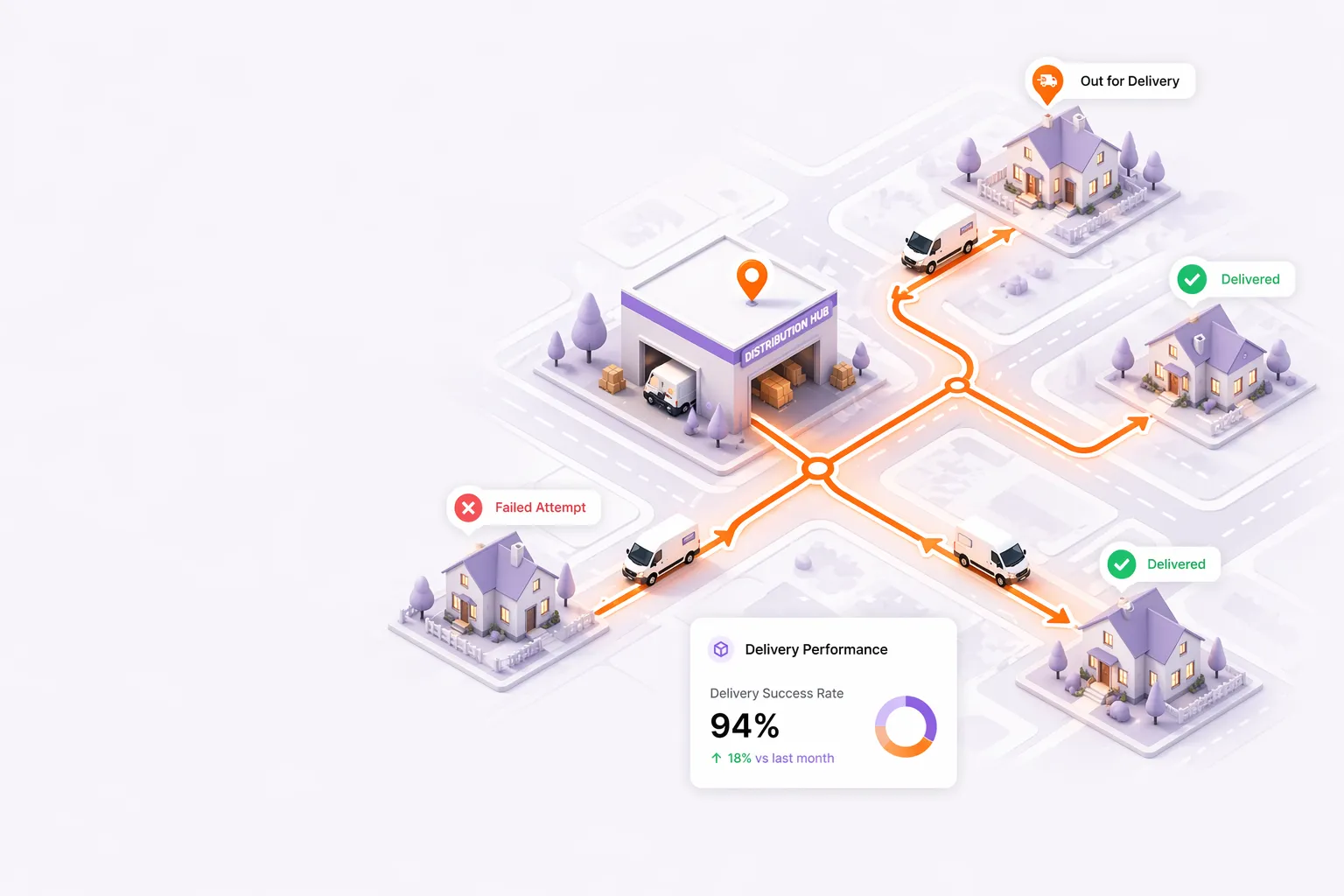
E-commerce fleets face density, time pressure, and customer expectation all at once. LivePin helps delivery operators manage that complexity with a live view of rider and van movement, route adherence, hub exits, failed-attempt patterns, and return loops. Operations teams can see if orders are progressing on plan instead of waiting until the end of the day to discover that routes drifted or capacity was misused.
When delivery promises tighten, the technology stack matters. Geofencing around hubs and customer clusters, route detection, deviation alerts, realtime ETA visibility, and optional video coverage help teams keep more orders on plan, secure parcels in transit, and reduce exceptions that turn into customer complaints or expensive redelivery cycles.
Hub and route accountability
Track dispatch start time, route progress, failed attempts, and route closure across dark stores, mother hubs, and delivery stations.
Deviation and delivery exception alerts
Catch rider detours, out-of-sequence visits, extended idle time, and abnormal return-to-hub behavior while orders can still be recovered.
Parcel security and proof context
Use location trail and optional video context to investigate parcel-loss complaints, suspicious stops, and high-risk delivery windows.
Reverse logistics visibility
Bring returns and failed deliveries into the same movement layer so operations can balance fresh deliveries with reverse pickups more intelligently.
Recommended LivePin stack
What operations teams gain
Increase first-attempt delivery confidence by spotting route and stop-level issues before the shift ends.
Reduce parcel-risk exposure by identifying suspicious detours, unusual idle behavior, and unplanned route closures.
Give hub supervisors and control towers a shared operational view across dispatch, delivery, return, and exception handling.
Support better capacity planning by showing which clusters, shifts, and riders consistently drift from plan.